
Industrial Cleaning Safety Standards for Nigerian Facilities (2026 Guide)
Introduction
Industrial cleaning plays a critical role in maintaining safe, productive, and compliant facilities across Nigeria’s manufacturing, oil & gas, marine, construction, warehousing, and commercial sectors. However, industrial cleaning operations also involve significant risks, including chemical exposure, slips and falls, fire hazards, machinery accidents, and environmental contamination.
To minimize these risks, businesses must follow proper industrial cleaning safety standards that protect workers, equipment, and operational environments.
In this guide, Tikweld Products and Services explains the key industrial cleaning safety standards Nigerian facilities should implement to improve workplace safety, reduce downtime, and maintain compliance.
Key Takeaway
Industrial cleaning safety standards help Nigerian facilities reduce accidents, protect equipment, and maintain compliance.
Proper PPE, chemical handling, risk assessment, and worker training are essential for safe industrial cleaning operations.
Using the correct industrial cleaning chemicals and equipment improves safety and operational efficiency.
What Are Industrial Cleaning Safety Standards?
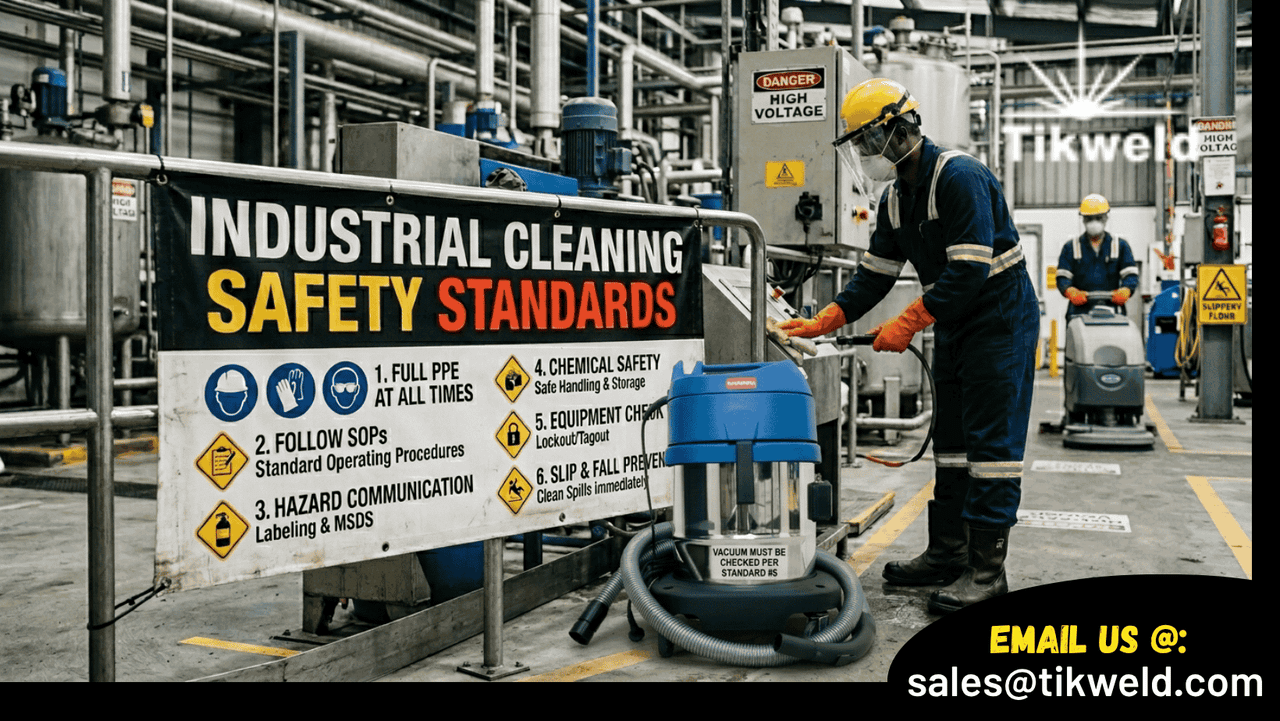
Industrial cleaning safety standards are the rules, procedures, and protective measures designed to ensure safe cleaning operations in industrial environments.
These standards help prevent hazards associated with:
- industrial cleaning chemicals
- grease and oil contamination
- confined spaces
- pressure washing
- slippery surfaces
- heavy machinery cleaning
- waste disposal
Industrial cleaning safety standards typically include:
- PPE requirements
- chemical handling procedures
- hazard identification
- spill response plans
- equipment safety checks
- worker safety training
Why Industrial Cleaning Safety Matters in Nigerian Facilities
Industrial facilities in Nigeria often operate in harsh environments involving:
- oil residue
- industrial dust
- high temperatures
- grease contamination
- chemical exposure
Without proper safety procedures, cleaning operations can lead to:
- worker injuries
- production downtime
- equipment damage
- environmental violations
- fire outbreaks
Industries That Require Strong Industrial Cleaning Safety Standards
Manufacturing Plants
Factories require regular cleaning to manage:
- machine oil
- production waste
- dust buildup
Oil & Gas Facilities
Oil and gas operations involve hazardous substances such as:
- hydrocarbons
- drilling mud
- sludge
- solvents
Marine & Offshore Facilities
Marine environments face:
- corrosion risks
- slippery decks
- fuel contamination
Recommended Internal Link:
Marine Industrial Cleaning for Offshore Operations
Warehouses and Logistics Facilities
Industrial cleaning helps maintain safe loading and storage areas.
Construction Sites
Construction equipment requires cleaning to remove:
- grease
- concrete residue
- dirt buildup
PPE Requirements for Industrial Cleaning
Personal Protective Equipment (PPE) is one of the most important industrial cleaning safety requirements.
Essential PPE for Industrial Cleaning
| PPE | Purpose |
|---|---|
| Safety goggles | Eye protection |
| Chemical-resistant gloves | Hand protection |
| Respirators | Protection from fumes |
| Coveralls | Body protection |
| Safety boots | Slip and impact protection |
| Face shields | Splash protection |
PPE Best Practices
- Inspect PPE before use
- Replace damaged PPE immediately
- Train workers on proper PPE usage
- Match PPE to the cleaning chemical being used
Industrial Cleaning Chemical Safety Standards
Industrial cleaning chemicals are effective but must be handled properly.
Proper Chemical Storage
- Store chemicals in labeled containers
- Separate incompatible chemicals
- Keep storage areas ventilated
- Restrict unauthorized access
Safety Data Sheets (SDS)
Every industrial cleaning chemical should have an SDS that explains:
- hazards
- handling instructions
- emergency response procedures
- storage recommendations
Safe Chemical Usage
Before using industrial cleaning chemicals:
- Read product instructions
- Wear proper PPE
- Ensure ventilation
- Avoid chemical mixing unless approved
Learn more: Top Industrial Cleaning Chemicals in Nigeria (2026) updated
Industrial Cleaning Risk Assessment Procedures
Before starting industrial cleaning, facilities should conduct risk assessments.
Step 1: Site Inspection
Identify:
- oil spills
- confined spaces
- electrical hazards
- chemical exposure risks
Step 2: Hazard Identification
Assess risks related to:
- machinery
- chemicals
- pressure equipment
- ventilation
Step 3: Control Measures
Implement:
- PPE
- safety signage
- ventilation systems
- spill containment
Step 4: Emergency Planning
Prepare for:
- spills
- fire incidents
- injuries
- chemical exposure
Common Hazards in Industrial Cleaning
Slips and Falls
Grease and water create slippery surfaces.
Chemical Exposure
Improper chemical handling can cause:
- burns
- respiratory irritation
- skin damage
Pressure Washer Injuries
High-pressure cleaning equipment can cause serious injuries if misused.
Electrical Hazards
Cleaning near live electrical systems increases electrocution risks.
Confined Space Hazards
Tank and vessel cleaning may expose workers to:
- low oxygen
- toxic fumes
International Industrial Cleaning Safety Standards
Nigerian facilities should align with international best practices from:
- OSHA (Occupational Safety and Health Administration)
- ISO safety standards
- HSE guidelines
- EPA environmental standards
Key OSHA Recommendations
OSHA recommends:
- proper PPE
- worker training
- chemical hazard communication
- confined space safety
External Reference Suggestions:
- OSHA workplace safety guidelines
- HSE industrial cleaning guidance
Industrial Cleaning Equipment Safety
Industrial cleaning equipment should be inspected regularly.
Pressure Washer Safety
- Never point at workers
- Use correct pressure levels
- Inspect hoses before use
Recommended Internal Link:
Pressure Washers in Nigeria
Vacuum and Scrubber Safety
- Check electrical grounding
- Ensure proper maintenance
Chemical Sprayer Safety
- Inspect nozzles and hoses
- Use compatible chemicals only
Spill Management and Emergency Response
Every industrial facility should have a spill response procedure.
Spill Response Steps
- Identify the spill
- Isolate the area
- Wear PPE
- Contain the spill
- Neutralize if necessary
- Dispose safely
Emergency Equipment Checklist
Facilities should maintain:
- spill kits
- fire extinguishers
- emergency showers
- first aid kits
Common Industrial Cleaning Safety Mistakes
- ignoring PPE requirements
- using the wrong cleaning chemical
- poor worker training
- inadequate ventilation
- improper chemical storage
- rushing cleaning operations
Industrial Cleaning Safety Checklist
| Task | Status |
|---|---|
| PPE inspected | ✔ |
| SDS reviewed | ✔ |
| Spill kit available | ✔ |
| Equipment checked | ✔ |
| Hazard assessment completed | ✔ |
| Emergency exits accessible | ✔ |
Best Practices for Industrial Cleaning Safety Compliance
Conduct Regular Worker Training
Workers should receive continuous safety education.
Use Approved Industrial Cleaning Chemicals
Use products suitable for industrial environments and contamination levels.
Maintain Safety Documentation
Keep records of:
- inspections
- incidents
- worker training
- chemical inventory
Schedule Preventive Maintenance
Maintain cleaning equipment regularly to avoid failures.
Why Choose Tikweld Products and Services?
Tikweld Products and Services supplies reliable industrial cleaning chemicals, maintenance products, safety equipment, and industrial cleaning solutions for Nigerian facilities.
We provide:
✔ industrial cleaning chemicals
✔ heavy-duty degreasers
✔ pressure washers
✔ industrial safety equipment
✔ technical product support
Need Industrial Cleaning Solutions?
Our team can help you choose the right industrial cleaning products and safety solutions for your facility.
Contact Tikweld Products and Services today for:
- product recommendations
- bulk pricing
- industrial cleaning support
- maintenance solutions
Frequently Asked Questions
What are industrial cleaning safety standards?
They are procedures and guidelines designed to ensure safe industrial cleaning operations.
Why is PPE important in industrial cleaning?
PPE protects workers from chemical exposure, injuries, and workplace hazards.
What are common industrial cleaning hazards?
Chemical exposure, slips and falls, pressure equipment injuries, and confined space hazards.
Why are industrial cleaning chemicals dangerous?
Improper handling can cause burns, respiratory issues, and environmental contamination.
How often should industrial cleaning safety training be conducted?
Regularly, especially when introducing new chemicals or cleaning procedures.
Conclusion
Industrial cleaning safety standards are essential for protecting workers, equipment, and operations in Nigerian facilities. From proper PPE and chemical handling to spill management and risk assessment, every industrial cleaning activity should follow structured safety procedures.
For Nigerian industries—including manufacturing, oil & gas, marine, warehousing, and construction—investing in industrial cleaning safety improves operational efficiency, reduces accidents, and ensures compliance.
Tikweld Products and Services provides reliable industrial cleaning chemicals, safety equipment, and maintenance solutions to help facilities operate safely and efficiently.
Newest Guide & Blog Updates

Inverter Welding Machines and Prices in Nigeria (2026)
Introduction Welding machine prices in Nigeria (October 2026) range from about ₦ PRICE for a 200A i...

Free Online Epoxy Flooring Training in Nigeria Scheduled for October 2026
Professionals, artisans, contractors and individuals interested in epoxy flooring will have an oppor...
Epoxy Resin and Hardener Mixing Ratio: A Complete Guide
Introduction If you are using epoxy resin for flooring, coating, casting or other applications, one...

How Much Epoxy Resin Do You Need for Flooring? Coverage & Calculation Guide
How Much Epoxy Resin Do You Need for Flooring? Coverage & Calculation Guide Calculating the amount o...
How to Remove Heavy Oil and Grease from Industrial Equipment
Introduction Heavy oil, grease and industrial grime can build up on machinery, engines, mechanical c...
Antirust Degreaser: How It Cleans and Protects Metal Surfaces
Introduction Industrial equipment and metal components are often exposed to two common maintenance p...