
How to Remove Heavy Oil and Grease from Industrial Equipment
Introduction
Heavy oil, grease and industrial grime can build up on machinery, engines, mechanical components and workshop equipment over time. If left untreated, this buildup can make equipment difficult to inspect, complicate maintenance work and create dirty working conditions.
Removing heavy grease effectively requires more than simply washing the equipment with water. The right cleaning method depends on the type of contamination, the equipment surface and the degreasing chemical being used.
This guide explains how to remove heavy oil and grease from industrial equipment, the cleaning methods available and how to choose the right industrial degreaser for the job.
Why Heavy Oil and Grease Build Up on Industrial Equipment
Industrial equipment is regularly exposed to lubricating oils, hydraulic fluids, grease and other contaminants.
Common causes of buildup include:
-
Oil leaks
-
Grease application during maintenance
-
Hydraulic fluid leaks
-
Lubricant overspray
-
Dust and dirt mixing with oil
-
Poor cleaning schedules
-
Continuous equipment operation
Over time, oil and grease can trap dust, dirt and other contaminants, creating a thick layer of industrial grime.
What You Need Before Cleaning Industrial Equipment
Before starting the cleaning process, identify the type of contamination and the equipment surface.
You may need:
-
A suitable industrial degreaser
-
Protective gloves
-
Eye protection
-
Cleaning brushes
-
Rags or absorbent materials
-
A spray applicator
-
Water for rinsing, where required
-
Appropriate containers for collecting waste
Always check the manufacturer's instructions and safety information before using any industrial cleaning chemical.
Step 1: Identify the Type of Oil and Grease
Not all industrial contamination is the same.
Before selecting a degreaser, identify whether you are dealing with:
-
Light lubricating oil
-
Heavy grease
-
Hydraulic oil
-
Engine oil
-
Petroleum-based residues
-
Oil mixed with dust and industrial dirt
The type and thickness of the contamination can influence which cleaning product and method will work best.
For example, general grease buildup may require a heavy-duty degreaser, while oil and grease-bound dirt may benefit from a solvent degreaser designed to penetrate the contamination.
Step 2: Choose the Right Industrial Degreaser
The degreaser you choose should match the cleaning application.
Two common options for industrial cleaning include heavy-duty degreasers and solvent degreasers.
Heavy-Duty Degreasers
Heavy-duty degreasers are generally used for demanding cleaning applications involving oil, grease and industrial dirt.
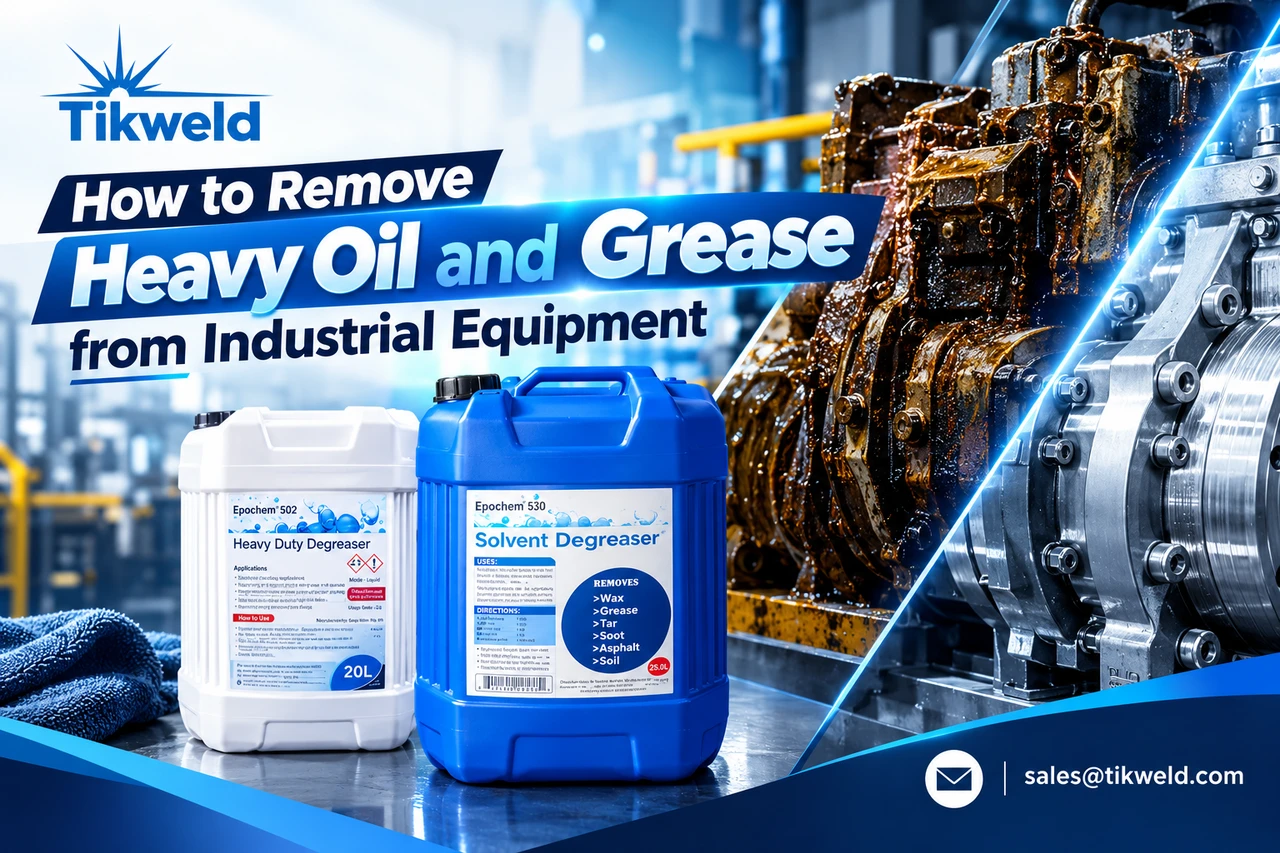
For example, EPOCHEM Heavy Duty Degreaser 502 is recommended as a general-purpose degreaser. According to its product safety information, it is completely soluble in water and has an alkaline formulation.
This type of degreaser may be suitable where a general-purpose, water-soluble cleaning process is required.
Consider a heavy-duty degreaser when:
-
You need general-purpose industrial degreasing.
-
Oil and grease buildup needs to be removed.
-
A water-soluble cleaning product is suitable for your process.
-
You are cleaning industrial equipment or workshop surfaces.
Solvent Degreasers
Solvent degreasers are formulated to penetrate and remove oil and grease-bound dirt.
According to the available product information, EPOCHEM 530 Solvent Degreaser is designed for oil and grease solvent cleaning and contains an emulsifier that allows easier removal with water. It can be applied by spraying, brushing or swabbing.
The product information also states that it provides temporary corrosion protection on metal and steel surfaces.
Consider a solvent degreaser when:
-
Oil and grease-bound dirt needs to be penetrated.
-
You are cleaning metal or steel surfaces.
-
Temporary corrosion protection is beneficial.
-
Spraying, brushing or swabbing is suitable for your cleaning process.
Step 3: Remove Excess Grease Before Applying the Degreaser
For thick grease buildup, remove as much loose contamination as possible before applying the cleaning chemical.
You can use:
-
Scrapers suitable for the equipment surface
-
Brushes
-
Rags
-
Absorbent materials
This helps reduce the amount of heavy grease on the surface before the degreaser is applied.
Avoid damaging sensitive surfaces or components while removing excess contamination.
Step 4: Apply the Degreaser
Apply the selected degreaser according to the product instructions.
Depending on the product and application, common methods may include:
-
Spraying
-
Brushing
-
Swabbing
-
Wiping
For EPOCHEM 530 Solvent Degreaser, the product information specifically lists spraying, brushing and swabbing as application methods.
Ensure the degreaser reaches areas with heavy oil and grease buildup.
Step 5: Allow the Degreaser to Work
After application, allow the degreaser sufficient contact time to work on the contamination.
The required contact time depends on:
-
The type of degreaser
-
The thickness of the grease
-
The type of contamination
-
The product manufacturer's instructions
Avoid allowing cleaning chemicals to remain on equipment longer than recommended by the manufacturer.
Step 6: Agitate Stubborn Grease and Dirt
For heavy contamination, brushing or wiping may help loosen stubborn deposits after the degreaser has been applied.
Use appropriate tools for the equipment surface.
Common options include:
-
Industrial cleaning brushes
-
Non-abrasive pads where appropriate
-
Rags
Do not use aggressive cleaning tools on surfaces that could be scratched or damaged.
Step 7: Remove the Loosened Oil and Grease
Once the contamination has been loosened, remove it using the appropriate method.
Depending on the degreaser, this may include:
-
Wiping
-
Rinsing with water
-
Collecting contaminated cleaning residue
-
Using absorbent materials
The EPOCHEM 530 product information states that its emulsifier permits easier removal with water.
Always follow the product-specific cleaning and disposal instructions.
Step 8: Inspect the Equipment
After cleaning, inspect the equipment to ensure that:
-
Heavy grease has been removed.
-
Important areas are accessible for inspection.
-
No contamination remains in critical areas.
-
The equipment surface is suitable for the next maintenance step.
Some equipment may require further cleaning, maintenance or protective treatment after degreasing.
How to Remove Heavy Grease from Metal Equipment
Metal equipment can accumulate oil and grease around:
-
Bearings
-
Mechanical components
-
Machine housings
-
Engine components
-
Metal surfaces
When cleaning metal equipment, consider:
-
The type of metal.
-
The cleaning chemical.
-
Whether corrosion protection is required after cleaning.
According to the EPOCHEM 530 product information, the solvent degreaser is designed to maintain corrosion-inhibitor properties on metal and steel surfaces and provides temporary corrosion protection.
Always confirm that the selected degreaser is suitable for the specific material before use.
How to Remove Heavy Oil from Machinery
Heavy oil buildup can make machinery difficult to inspect and maintain.
A typical cleaning process may involve:
1. Remove Excess Oil
Use suitable absorbent materials to remove loose oil.
2. Apply a Suitable Degreaser
Choose a degreaser based on the contamination and equipment surface.
3. Allow the Product to Work
Follow the manufacturer's recommended contact time.
4. Agitate Where Necessary
Use appropriate brushes or cleaning tools for stubborn buildup.
5. Remove the Contamination
Wipe or rinse according to the product instructions.
6. Inspect the Equipment
Ensure the machinery is clean before proceeding with maintenance or inspection.
Heavy-Duty Degreaser vs Solvent Degreaser for Industrial Equipment
The best option depends on the cleaning application.
| Cleaning Requirement | Possible Option |
|---|---|
| General-purpose degreasing | Heavy-duty degreaser |
| Water-soluble cleaning process | Heavy-duty degreaser |
| Heavy oil and grease-bound dirt | Solvent degreaser |
| Metal and steel surfaces | Solvent degreaser, where compatible |
| Temporary corrosion protection | EPOCHEM 530 Solvent Degreaser |
| Spray, brush or swab application | EPOCHEM 530 Solvent Degreaser |
The right product should always be selected based on the manufacturer's instructions and the specific cleaning application.
Related Article
Heavy-Duty Degreaser vs Solvent Degreaser: Which Is Right for Your Equipment?
Common Mistakes to Avoid When Degreasing Industrial Equipment
Using the Wrong Degreaser
A product suitable for one type of contamination may not be the best choice for another.
Always consider:
-
Type of oil or grease
-
Surface material
-
Cleaning method
-
Product compatibility
Applying Chemicals Without Checking the Surface
Different materials can react differently to cleaning chemicals.
Always check the product information and compatibility guidance before applying a degreaser.
Skipping Safety Equipment
Industrial degreasers may require appropriate PPE.
The safety information for EPOCHEM 502 states that the concentrated product can irritate the eyes and skin and recommends appropriate protective equipment, including gloves and eye or face protection.
Not Following Disposal Instructions
Oil, grease and contaminated cleaning chemicals should be handled according to applicable disposal procedures.
The EPOCHEM 530 product information recommends disposal through authorised collection points and advises users to follow the relevant Material Safety Data Sheet.
Safety Tips When Cleaning Heavy Oil and Grease
Before using any industrial degreaser:
-
Read the product label.
-
Review the Safety Data Sheet (SDS).
-
Wear appropriate gloves.
-
Use eye protection where required.
-
Avoid unnecessary skin contact.
-
Ensure appropriate ventilation.
-
Do not mix cleaning chemicals unless specifically instructed.
-
Follow product-specific disposal procedures.
For EPOCHEM 502, the available safety information specifically recommends suitable protective gloves and eye or face protection.
For EPOCHEM 530, the product information advises avoiding prolonged skin contact and using impervious gloves.
Frequently Asked Questions
What is the best way to remove heavy oil from industrial equipment?
The best method depends on the type of oil, the equipment surface and the cleaning process. In many cases, excess oil is removed first before applying a suitable industrial degreaser.
What removes heavy grease from machinery?
Heavy-duty degreasers and solvent degreasers can be used for industrial grease removal depending on the product formulation and application.
A solvent degreaser may be useful where oil and grease-bound dirt needs to be penetrated, while a heavy-duty degreaser may be suitable for general-purpose degreasing.
Can you use water to remove industrial grease?
Water alone may not effectively remove heavy oil and grease. Some degreasers are water-soluble or contain emulsifiers that allow loosened contamination to be removed more easily with water.
What is the best degreaser for metal equipment?
The best degreaser depends on the metal, contamination and cleaning requirements.
EPOCHEM 530 is formulated for oil and grease solvent cleaning and provides temporary corrosion protection on metal and steel surfaces according to its product information.
Always confirm compatibility before use.
Conclusion
Removing heavy oil and grease from industrial equipment starts with understanding the type of contamination and choosing a suitable cleaning method.
For thick buildup, excess grease can be removed before applying an appropriate industrial degreaser. Heavy-duty degreasers can be suitable for general-purpose cleaning applications, while solvent degreasers may be useful when oil and grease-bound dirt needs to be penetrated.
Based on the available product information, EPOCHEM 502 Heavy Duty Degreaser is a general-purpose, alkaline and water-soluble degreaser, while EPOCHEM 530 Solvent Degreaser is designed to penetrate oil and grease-bound dirt and provides temporary corrosion protection on metal and steel surfaces.
Before using any degreaser, always check the manufacturer's instructions, equipment compatibility and relevant safety information.
Explore Tikweld's range of industrial degreasers and cleaning chemicals to find suitable products for machinery, workshop equipment and industrial maintenance applications.
Newest Guide & Blog Updates

Inverter Welding Machines and Prices in Nigeria (2026)
Introduction Welding machine prices in Nigeria (October 2026) range from about ₦ PRICE for a 200A i...

Free Online Epoxy Flooring Training in Nigeria Scheduled for October 2026
Professionals, artisans, contractors and individuals interested in epoxy flooring will have an oppor...
Epoxy Resin and Hardener Mixing Ratio: A Complete Guide
Introduction If you are using epoxy resin for flooring, coating, casting or other applications, one...

How Much Epoxy Resin Do You Need for Flooring? Coverage & Calculation Guide
How Much Epoxy Resin Do You Need for Flooring? Coverage & Calculation Guide Calculating the amount o...
How to Remove Heavy Oil and Grease from Industrial Equipment
Introduction Heavy oil, grease and industrial grime can build up on machinery, engines, mechanical c...
Antirust Degreaser: How It Cleans and Protects Metal Surfaces
Introduction Industrial equipment and metal components are often exposed to two common maintenance p...