
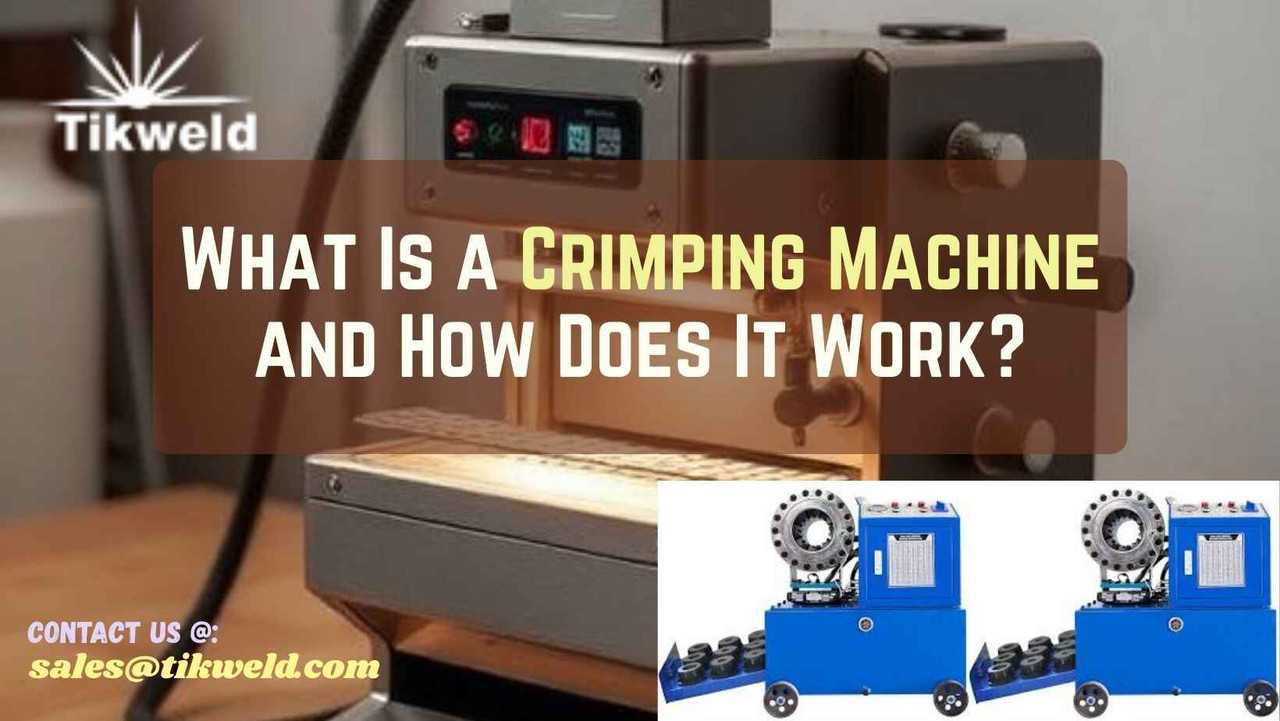
What Is a Crimping Machine and How Does It Work? (Beginner Guide)
Introduction
A crimping machine is one of the most essential tools in modern industrial and mechanical operations. Whether in construction, automotive repairs, oil & gas, agriculture, or hydraulic equipment maintenance, there comes a time when a hose, cable, or tube must be securely attached to a connector or fitting. When this connection is done incorrectly, the result is leakage, pressure loss, machine failure, and even workplace accidents.
This is where a crimping machine comes in.
A crimping machine applies controlled and powerful force to compress a metal ferrule or sleeve onto a hose or cable, creating a firm, leak-proof, and permanent connection. It ensures that hoses and cables stay attached even under high pressure, high temperature, vibration, and heavy mechanical load.
Key takeaway: A crimping machine helps you join hoses and fittings in a way that will NEVER slip or leak — the connection becomes part of the hose.
Crimping machines are widely used in sectors like:
-
Construction & mining
-
Oil & gas (onshore & offshore)
-
Automotive and heavy-duty workshop services
-
Manufacturing & production factories
-
Agriculture and earth-moving equipment industries
-
Marine operations
Wherever hydraulic hoses, pressure lines, fuel lines, air conditioners or industrial cables exist, crimping is involved.
Looking for Hose crimping services in Nigeria Click here
What Exactly is a Crimping Machine?
A crimping machine (also simply called a hose crimper) is a device that compresses and reshapes metal around a hose or cable to hold it firmly in place. It replaces welding and clamp tightening with a stronger and more professional hydraulic bond.
A simple explanation for beginners
Imagine placing a metal ring around a hose, then squeezing the ring evenly from all sides until it becomes tight and fused into the hose that is what a crimping machine does.
The result is a sealed, pressure-resistant connection that will not slip even under extreme loads.
What materials can be crimped?
- Hydraulic hoses
- Automotive fuel lines
- Air conditioner hoses
- Industrial tubing
- Steel pipes
- Electrical cables (automated crimping machines)
This makes crimping one of the most reliable joining methods for high-pressure systems.
Types of Crimping Machines
Crimping machines come in different types depending on the pressure capacity, usage environment, production volume, and power source. Below are the most common types explained in simple terms:
Manual Crimping Machines
These machines use hand-lever or screw pressure to crimp hoses. They are:
- Portable
- Budget-friendly
- Easy to operate without electricity
Best for:
Small workshops, roadside mechanics, small-diameter hose repairs, and emergency field jobs.
Hydraulic Crimping Machines
Hydraulic crimpers use hydraulic force to deliver very high pressure during crimping. They are:
- More powerful than manual crimpers
- Suitable for thick and high-pressure hoses
- Common in industrial workshops and maintenance departments
Best for:
Heavy equipment servicing, excavators, forklifts, pay loaders, power plants, and hydraulic hose assembly businesses.
Electric / PLC-Controlled Crimping Machines
These are the fastest and most advanced crimpers. They use an electric motor (or PLC automation) for precision and repeatability.
Best for:
Mass production, high-volume hose assembly lines, OEM equipment manufacturing, and factories where speed + automation are essential.
Pneumatic Crimping Machines
These machines operate using compressed air. They are:
- Faster than manual crimpers
- Often used for medium-pressure industrial applications
Best for:
Workshops and industrial sites with access to air compressors.
Summary Table (for Quick Understanding)
|
Type |
Power Source |
Strength Level |
Recommended Users |
|
Manual |
Hand-lever |
Low |
Low-volume, mobile mechanics |
|
Pneumatic |
Compressed air |
Medium |
Workshops & industrial sites |
|
Hydraulic |
Hydraulic pump |
High |
Industrial maintenance & heavy equipment |
|
Electric / PLC |
Electric motor |
Very High |
Production factories & assembly lines |
How a Crimping Machine Works (Step-by-Step for Beginners)
Although crimping machines vary in design and power, they all follow the same working principle. The goal is to compress a ferrule (metal sleeve) around a hose or cable until it locks permanently onto the connector.
Step-by-step Crimping Process
- Select the correct hose and fitting
- The fitting and ferrule must match the diameter and type of the hose.
- Choose the right crimping die
- Dies come in different sizes and shapes. The wrong die size leads to leaks or crushed hoses.
- Insert the hose and fitting into the crimping head
- The fitting is positioned so that the ferrule sits inside the die cavity.
- Adjust the machine settings
- For some machines, you set the crimp diameter, pressure or depth based on manufacturer recommendations.
- Activate the crimping cycle
- Manual: apply lever pressure
- Hydraulic: pressurize the hydraulic pump
- Electric / PLC: press the button / foot pedal
- The machine compresses the ferrule
- Force is applied evenly from all angles to reshape the metal sleeve around the hose.
- Inspect the finished crimp
- A proper crimp should be even, circular, aligned and secure — not cracked, oval or loose.
What Makes a ‘Good Crimp’?
Many first-time users assume that “tight is tight,” but improper crimping is one of the most common causes of hydraulic hose failure.
A good crimp should meet the following conditions:
|
Quality Standard |
What It Means |
|
Correct crimp diameter |
Matches manufacturer chart |
|
Uniform compression |
No swelling, ovality or cracks |
|
No exposed wire braids |
Hose remains intact and strong |
|
Firm pull strength |
Hose doesn’t slip out during operation |
|
Pressure-safe |
Leak-free under working pressure |
Crimping requires precision — not force or guesswork.
Under-crimping → leaks and hose pullout
Over-crimping → weakens the hose reinforcement and causes failure
Benefits of Using Crimping Machines
Crimping machines are not just for convenience — they improve safety, reliability and cost-efficiency across industries.
Leak-Proof Hydraulic Connections
Crimping eliminates pressure loss and leakage, especially in construction and heavy machinery.
Improved Workplace Safety
A properly crimped hose prevents burst accidents, protecting both equipment and workers.
Faster Repairs and Maintenance
Crimping enables workshops and technicians to complete hose replacements in minutes rather than hours.
Cost Savings
- No need to outsource hose assembly
- Fewer emergency breakdowns
- Less downtime for machines and workers
Professional & Reliable Hose Finishing
Many hydraulic and automotive service businesses use crimping to:
- Improve service quality
- Increase customer trust
- Expand service offerings (mobile hydraulic repair, roadside service, etc.)
Compatible Across Multiple Industries
Crimping machines support:
- Excavators & heavy equipment
- Generators & power plants
- Automotive & AC servicing
- Marine vessels
- Oil & gas rigs
- Agriculture machinery
In workshops, a crimping machine can pay for itself within months by adding hose assembly as a billable service.
Applications of Crimping Machines
Crimping machines are used anywhere a high-pressure hose, cable or pipe must stay permanently connected to a fitting. Below are the most common applications:
|
Industry |
Typical Use |
|
Construction & Mining |
Excavators, pay loaders, cranes, forklifts |
|
Oil & Gas (onshore & offshore) |
Hydraulic equipment on rigs & refineries |
|
Automotive & Transport |
Fuel lines, brake lines, AC hoses |
|
Power Plants |
Turbines, cooling systems, hydraulic units |
|
Manufacturing |
Pneumatic & hydraulic production lines |
|
Agriculture |
Tractors, harvesters, and irrigation pumps |
|
Marine |
Vessel deck machinery and steering hydraulics |
Wherever machines rely on hydraulic pressure or fluid transmission, a crimper is necessary.
If a workshop repairs hydraulic cylinders, heavy equipment, or industrial hoses — a crimping machine is no longer optional, it is essential.
Safety Practices for Beginners
Crimping involves high pressure and compressed metals, so safety must not be neglected.
- Always wear eye protection and heavy-duty gloves
- Use only manufacturer-approved dies and fittings
- Never crimp a damaged, rusted or reused ferrule
- Do not exceed recommended crimp diameter
- Inspect hoses for wear, cracks and bulges BEFORE crimping
- Keep hands away from the die area during operation
- After crimping, test under controlled pressure before returning to service
Wrong crimping can lead to hose bursts, equipment failure, and severe workplace injuries — precision and training are critical.
Crimping Machine Maintenance Checklist
A well-maintained crimping machine ensures accuracy, safety and long equipment life. Use this checklist regularly:
|
Task |
Frequency |
|
Clean dies after every job |
After every use |
|
Inspect dies for cracks or uneven wear |
Weekly |
|
Lubricate sliding parts |
Weekly |
|
Inspect hydraulic pump / levels (if applicable) |
Monthly |
|
Replace oil filters (hydraulic crimpers) |
Quarterly |
|
Calibrate crimp diameter settings |
Quarterly |
|
Store machine in dry, dust-free environment |
Always |
Conclusion
A crimping machine is the most reliable tool for producing strong, clean and leak-proof joints in hydraulic hoses, industrial tubes and automotive lines. It improves equipment safety, reduces downtime and gives workshops the ability to complete repairs faster instead of waiting for outsourced hose assembly.
With the right machine type, dies, maintenance practices and safety habits, even beginners can produce professional-grade crimps that meet industrial standards.
If you need a crimping machine for industrial, workshop or field service use, TIKWELD can help you get the right model for your job and hose sizes.
Newest Guide & Blog Updates

Industrial Arc Welding Machines in Nigeria: Transformer vs Inverter (Which Is Best?)
Introduction Nigeria’s construction, oil & gas, fabrication, and manufacturing sectors continue to e...
Complete Guide to AC/DC Pulse TIG Welding Machines in Nigeria (2026 Buyer’s Guide)
Introduction In Nigeria’s growing fabrication, oil & gas, construction, food processing, and marine...
Know the difference between an inverter welder and a transformer welding machine
Introduction Choosing the right welding machine is one of the most important decisions for a...
GZ Industrial Supplies Moves Dei-Dei Abuja Showroom to Kubwa for Better Access to Contractors and Industrial Buyers
PRESS RELEASE Abuja, Nigeria – 4th January 2026 — GZ Industrial Supplies Ltd, a leading supplier of...
Inverter Welding Machines and Prices in Nigeria (2026)
Inverter welding machines have become the preferred choice for most Nigerian welders in 2026. They a...
Latest Generator Prices in Nigeria: A 2026 Buyer’s Guide
Introduction In Nigeria, the inconsistent power supply has made generators an essential component fo...