
5 Signs It’s Time to Replace Your Welding Machine
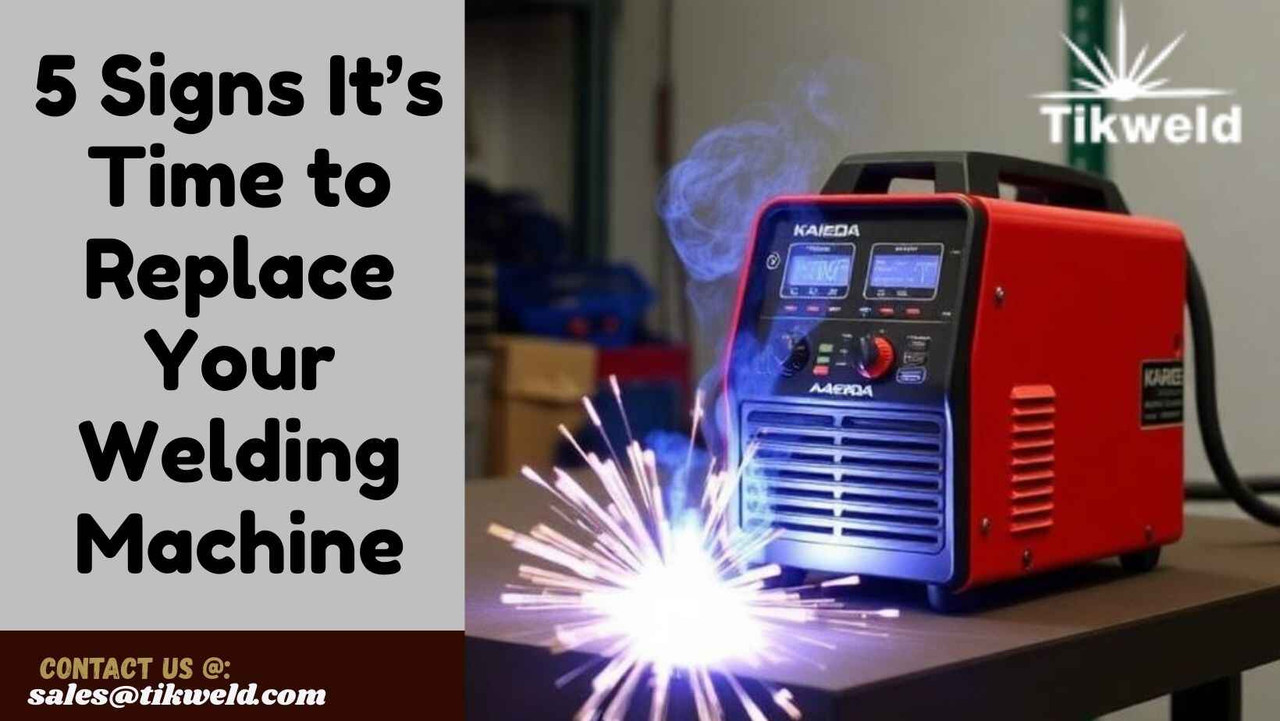
Welding machines are the backbone of fabrication workshops, construction sites, manufacturing plants, and repair facilities across Nigeria. When a welding machine performs optimally, it delivers clean welds, stable arcs, and consistent productivity. However, as machines age or are pushed beyond their limits, performance drops—and the hidden costs begin to rise.
Many welders continue using failing welding machines without realizing that poor weld quality, high power consumption, and frequent downtime are warning signs of deeper issues. In reality, replacing an outdated welding machine at the right time can save money, improve safety, and significantly boost efficiency.
This guide explains the five key signs that indicate it may be time to replace your welding machine, helping workshops and industrial users make informed decisions before equipment failure disrupts operations.
Frequent Breakdowns and Rising Repair Costs
One of the clearest indicators that a welding machine needs replacement is constant breakdowns. While occasional maintenance is normal, repeated failures signal that the machine has reached the end of its service life.
Common issues include:
-
Burnt circuit boards or control panels
-
Transformer or rectifier failures
-
Faulty power switches and connectors
-
Inconsistent current output
When repairs become frequent, downtime increases and productivity suffers. In many cases, spare parts for older welding machines are difficult to source, leading to longer repair times and higher costs.
Expert tip:
If repair expenses begin to exceed 30–40% of the cost of a new welding machine, replacement is usually the more cost-effective option.
Poor Weld Quality and Inconsistent Output
Weld quality is a direct reflection of machine performance. If your welding machine struggles to deliver stable output, the results can be both costly and dangerous.
Warning signs of declining weld quality include:
- Unstable or flickering welding arc
- Excessive spatter during welding
- Weak or uneven weld penetration
- Difficulty maintaining consistent settings
In industries such as structural fabrication, pipeline welding, and pressure vessel manufacturing, inconsistent weld quality can lead to failed inspections, rework, and safety risks. These issues often stem from aging internal components that no longer regulate current properly.
When a welding machine can no longer produce reliable welds—even after calibration—it is a strong sign that replacement should be considered.
Reduced Efficiency and High Power Consumption
Older welding machines, especially traditional transformer-based models, tend to consume significantly more power than modern inverter welding machines. This inefficiency leads to higher electricity or generator fuel costs over time.
Common efficiency-related problems include:
- Excessive heat generation during operation
- Longer welding cycles
- Overheating that forces frequent shutdowns
- Reduced duty cycle performance
Modern inverter welding machines available from Tikweld are designed to deliver higher efficiency, better power control, and lower operating costs. If your current machine struggles to maintain performance without overheating, upgrading can dramatically improve productivity.
Safety Risks and Compliance Concerns
Safety should never be compromised in welding operations. As welding machines age, electrical and mechanical components deteriorate, increasing the risk of accidents and non-compliance with workplace safety standards.
Common safety-related warning signs include:
- Electric shocks or current leakage
- Overheating cables and connectors
- Burning smells during operation
- Frequent tripping of circuit breakers
- Inconsistent grounding
In industrial environments such as fabrication yards, oil & gas sites, and construction projects, unsafe welding equipment can lead to serious injuries, fires, or costly shutdowns. Many older welding machines were built before modern safety standards became common and may no longer meet today’s site requirements.
If your welding machine poses a risk to operators or fails site safety inspections, replacement is not optional—it is a necessity.
Incompatibility with Modern Welding Requirements
Welding technology has advanced significantly in recent years. Many older welding machines struggle to meet today’s demands for precision, versatility, and portability.
You may need to replace your welding machine if it:
- Cannot weld newer materials such as thin steel, stainless steel, or aluminum
- Does not support MIG or TIG welding processes
- Lacks digital controls or adjustable parameters
- Is too heavy or bulky for site work
- Cannot deliver consistent output under variable power conditions
Modern inverter welding machines now offer multi-process capabilities (MMA, MIG, TIG), better arc stability, and compact designs suitable for both workshop and field use. If your current machine limits the type of jobs you can take on, it is holding your business back.
Repair or Replace? Making the Right Decision
Many welding professionals struggle with the decision to repair or replace a failing welding machine. While repairs may seem cheaper upfront, they often lead to repeated costs and reduced performance over time.
Repair vs Replacement Comparison
|
Factor |
Repair |
Replace |
|
Cost |
Increases over time |
One-time investment |
|
Downtime |
Frequent |
Minimal |
|
Performance |
Declining |
Improved |
|
Energy Efficiency |
Poor |
High |
|
Safety |
Risky |
Meets modern standards |
|
Warranty |
None |
Manufacturer warranty |
|
Capability |
Limited |
Multi-process optionsIf repairs are frequent, parts are hard to find, or performance continues to drop, replacement is usually the smarter long-term choice. |
Benefits of Upgrading to a New Welding Machine
Replacing an outdated welding machine comes with several immediate and long-term benefits:
- Improved weld quality with stable arc performance
- Lower power consumption, saving electricity or fuel costs
- Higher duty cycles for continuous industrial use
- Enhanced safety features for operators
- Multi-process functionality, allowing MIG, TIG, and Arc welding
- Portability for on-site jobs
- Warranty and after-sales support
For workshops and industrial users, these benefits translate into higher productivity, better job quality, and increased profitability.
How to Choose the Right Replacement Welding Machine
Once you identify that it’s time to replace your welding machine, choosing the right replacement is critical. The best welding machine depends on your application, workload, and operating environment.
Key Factors to Consider
- Welding Process
- Arc (MMA) – Ideal for general fabrication, construction, and repairs
- MIG – Best for production welding and clean, high-speed output
- TIG – Suitable for precision welding on stainless steel and aluminum
- Multi-process machines – Offer flexibility for workshops handling diverse jobs
- Power Requirements
Consider your available power source:
- Single-phase or three-phase supply
- Generator compatibility for site work
- Duty Cycle
For industrial and workshop use, choose machines with higher duty cycles to avoid overheating and downtime. - Portability and Build Quality
Compact inverter welders are easier to transport and ideal for fieldwork, while heavier-duty machines suit permanent workshops. - Availability of Support and Spare Parts
Always choose brands with local support, spare parts, and technical assistance in Nigeria.
Recommended Welding Machines from Tikweld
Tikweld supplies a wide range of modern welding machines designed for Nigerian industrial conditions, including:
- Arc Welding Machines for construction and fabrication
- Inverter Welding Machines for energy efficiency and stable output
- MIG Welding Machines for production environments
- TIG Welding Machines for precision applications
- Multi-Process Welders for maximum versatility
All machines supplied by Tikweld are:
- Original and factory-certified
- Suitable for generator and grid power
- Backed by warranty and after-sales support
For expert guidance, Tikweld’s technical team can help match the right machine to your specific welding needs.
Frequently Asked Questions
How long does a welding machine typically last?
With proper maintenance, most welding machines last 7–10 years. However, heavy industrial use or poor maintenance can shorten lifespan.
Is it better to repair or replace an old welding machine?
If repair costs exceed 30–40% of the price of a new machine, replacement is usually more economical.
Are inverter welding machines better than transformer machines?
Yes. Inverter welders are more energy-efficient, lighter, and provide better arc control than traditional transformer machines.
What welding machine is best for workshops in Nigeria?
Multi-process inverter welding machines are ideal for workshops handling varied welding jobs.
Related Article
Welding Machine Maintenance: Tips to Extend the Life of Your Arc Welder
Conclusion
Using a failing or outdated welding machine increases costs, reduces productivity, and exposes operators to safety risks. Recognizing the warning signs early allows you to upgrade before breakdowns disrupt your work.
By investing in a modern welding machine, you gain better weld quality, improved efficiency, enhanced safety, and the flexibility to take on more jobs.
For reliable, modern welding machines backed by expert support, contact Tikweld today for advice, pricing, or a showroom visit.
Newest Guide & Blog Updates

Industrial Arc Welding Machines in Nigeria: Transformer vs Inverter (Which Is Best?)
Introduction Nigeria’s construction, oil & gas, fabrication, and manufacturing sectors continue to e...
Complete Guide to AC/DC Pulse TIG Welding Machines in Nigeria (2026 Buyer’s Guide)
Introduction In Nigeria’s growing fabrication, oil & gas, construction, food processing, and marine...
Know the difference between an inverter welder and a transformer welding machine
Introduction Choosing the right welding machine is one of the most important decisions for a...
GZ Industrial Supplies Moves Dei-Dei Abuja Showroom to Kubwa for Better Access to Contractors and Industrial Buyers
PRESS RELEASE Abuja, Nigeria – 4th January 2026 — GZ Industrial Supplies Ltd, a leading supplier of...
Inverter Welding Machines and Prices in Nigeria (2026)
Inverter welding machines have become the preferred choice for most Nigerian welders in 2026. They a...
Latest Generator Prices in Nigeria: A 2026 Buyer’s Guide
Introduction In Nigeria, the inconsistent power supply has made generators an essential component fo...