
Hydraulic Hose Sales & Crimping Services in Nigeria (2026): Sizes, Prices, Applications & Expert Support
Hydraulic systems power some of the most critical equipment used across Nigeria’s industrial landscape—from construction machinery and agricultural equipment to oil & gas installations, fabrication workshops, and manufacturing plants. At the heart of these systems are hydraulic hoses, which must withstand extreme pressure, temperature, vibration, and continuous use.
However, supplying a hydraulic hose alone is not enough. Improper hose selection or poor crimping is one of the leading causes of hydraulic failure in Nigeria, resulting in oil leaks, equipment downtime, safety hazards, and expensive repairs. This is why professional hydraulic hose sales and precision crimping services must go hand in hand.
This page provides a complete, practical overview of:
-
The types of hydraulic hoses available in Nigeria
-
Common hose sizes and pressure ratings
-
Hydraulic hose prices and cost considerations
-
Professional hose crimping services and best practices
-
How to choose the right hose and crimping support for your equipment
Whether you are an engineer, technician, contractor, fleet manager, or procurement officer, this page is designed to help you make safe, cost-effective, and technically correct decisions.
FREE DOWNLOAD:
Avoid costly hydraulic hose failures.
Get our 2026 Hydraulic Hose & Crimping Expert Guide (PDF)
Download Now

What Are Hydraulic Hoses?
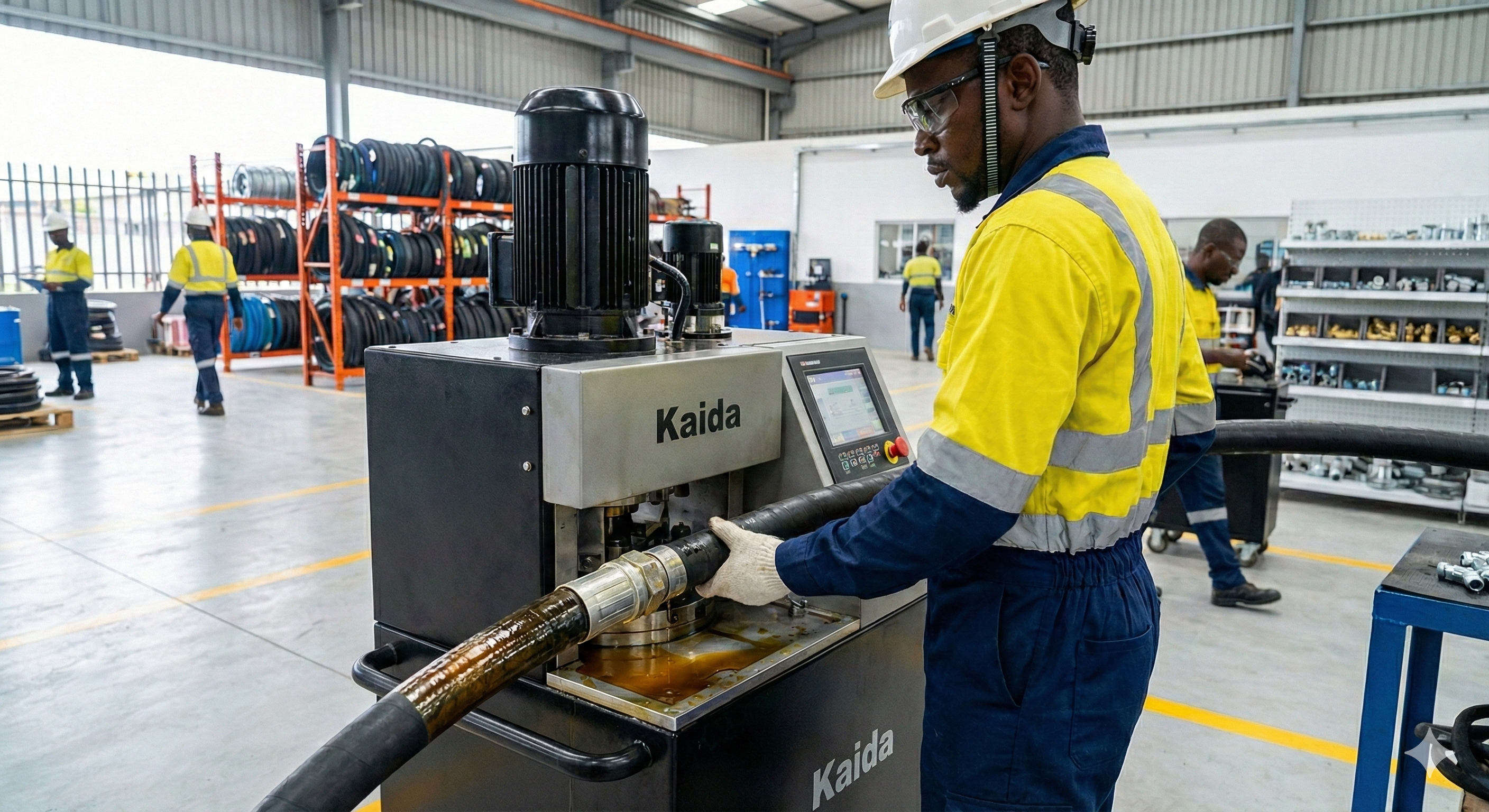
Hydraulic hoses are flexible, high-pressure hoses designed to carry hydraulic fluid between components in a hydraulic system. These hoses transmit power by allowing pressurized fluid to move efficiently between pumps, valves, cylinders, and motors.
Unlike ordinary industrial hoses, hydraulic hoses are engineered to handle high pressure, pulsation, heat, and chemical exposure. They are typically constructed using multiple layers, including:
-
An inner tube compatible with hydraulic fluids
-
Reinforcement layers (steel wire braid or spiral) for pressure strength
-
An outer cover for abrasion, weather, and chemical resistance
Because of these demanding conditions, selecting the correct hydraulic hose—and assembling it properly with accurate crimping—is essential for system reliability.
Hydraulic Hoses vs Industrial Hoses: Key Differences
Many failures occur when industrial hoses are mistakenly used in hydraulic applications. The key differences include:
-
Pressure rating: Hydraulic hoses are built for high pressure; industrial hoses are not
-
Reinforcement: Hydraulic hoses use steel wire reinforcement
-
Safety requirements: Hydraulic hoses must meet strict pressure and burst standards
-
Crimping precision: Hydraulic hoses require exact crimp dimensions
Using the wrong hose type can lead to sudden hose rupture, fluid loss, and serious safety risks.
Types of Hydraulic Hoses We Sell in Nigeria
Hydraulic hoses are categorized based on pressure capacity, reinforcement type, and application. Below are the most common types supplied for industrial use in Nigeria.
Low-Pressure Hydraulic Hoses
Low-pressure hydraulic hoses are used for return lines, suction lines, and light-duty hydraulic systems where pressure is relatively low.
Typical applications include:
-
Hydraulic oil return lines
-
Cooling systems
-
Light machinery and auxiliary equipment
These hoses offer flexibility and cost efficiency but must still be crimped correctly to prevent leaks.
Medium-Pressure Hydraulic Hoses
Medium-pressure hoses are among the most widely used in Nigeria’s industrial and construction sectors.
Common applications:
-
Construction equipment
-
Agricultural machinery
-
Forklifts and loaders
-
Workshop hydraulic systems
These hoses typically feature single or double wire braid reinforcement and require accurate crimping dies to maintain pressure integrity.
High-Pressure & Reinforced Hydraulic Hoses
High-pressure hydraulic hoses are designed for extreme working conditions and continuous heavy use.
Industries that rely on high-pressure hoses include:
-
Oil & gas operations
-
Mining and quarrying
-
Marine and offshore equipment
-
Heavy industrial plants
Because of the risks involved, precision crimping, pressure testing, and correct fitting compatibility are critical for these hoses.
Hydraulic Hose Sizes & Pressure Ratings Explained
Selecting the correct hose size is just as important as choosing the right pressure rating.
Common Hydraulic Hose Sizes
Hydraulic hoses are typically measured by their inner diameter (ID). Common sizes include:
-
1/4″
-
3/8″
-
1/2″
-
3/4″
-
1″
Each size supports different flow rates and system demands. Using the wrong size can result in pressure loss, overheating, or premature hose failure.
Pressure Ratings
Hydraulic hoses are rated by:
-
Working pressure
-
Burst pressure
-
Safety factor
Always ensure the hose pressure rating exceeds the maximum system pressure, especially in Nigerian operating environments where heat and load variations are common.
Hydraulic Hose Prices in Nigeria (2026 Guide)
Hydraulic hose prices in Nigeria vary depending on several critical factors. Understanding these factors helps buyers avoid cheap, low-quality hoses that often lead to early failure and costly downtime.
Factors That Affect Hydraulic Hose Prices
-
Hose size (inner diameter)
-
Pressure rating and reinforcement type
-
Brand and manufacturing standard
-
Hose cover material and abrasion resistance
-
Availability and import costs
Typical Price Considerations
-
Low-pressure hoses are generally more affordable and used for return lines
-
Medium-pressure hoses fall in the mid-range and are the most commonly purchased
-
High-pressure and spiral-wire hoses cost more due to reinforced construction and safety requirements
Important Note:
The true cost of a hydraulic hose is not just the purchase price. Poor-quality hoses or incorrect crimping often result in leaks, burst hoses, equipment damage, and lost production time.
? Call or WhatsApp to confirm current hydraulic hose prices and availability in Nigeria.
Why Professional Hose Crimping Saves Money
Many hose failures are not caused by the hose itself but by poor crimping practices. Incorrect crimping can lead to:
-
Under-crimped fittings that leak under pressure
-
Over-crimped fittings that damage hose reinforcement
-
Premature hose failure
-
Unsafe operating conditions
Professional hose crimping ensures:
-
Correct die selection based on hose OD
-
Manufacturer-specified crimp dimensions
-
Uniform compression and fitting alignment
-
Leak-free and pressure-safe assemblies
This is especially important for high-pressure systems used in construction, oil & gas, and manufacturing.
Hydraulic Hose Crimping Services in Nigeria
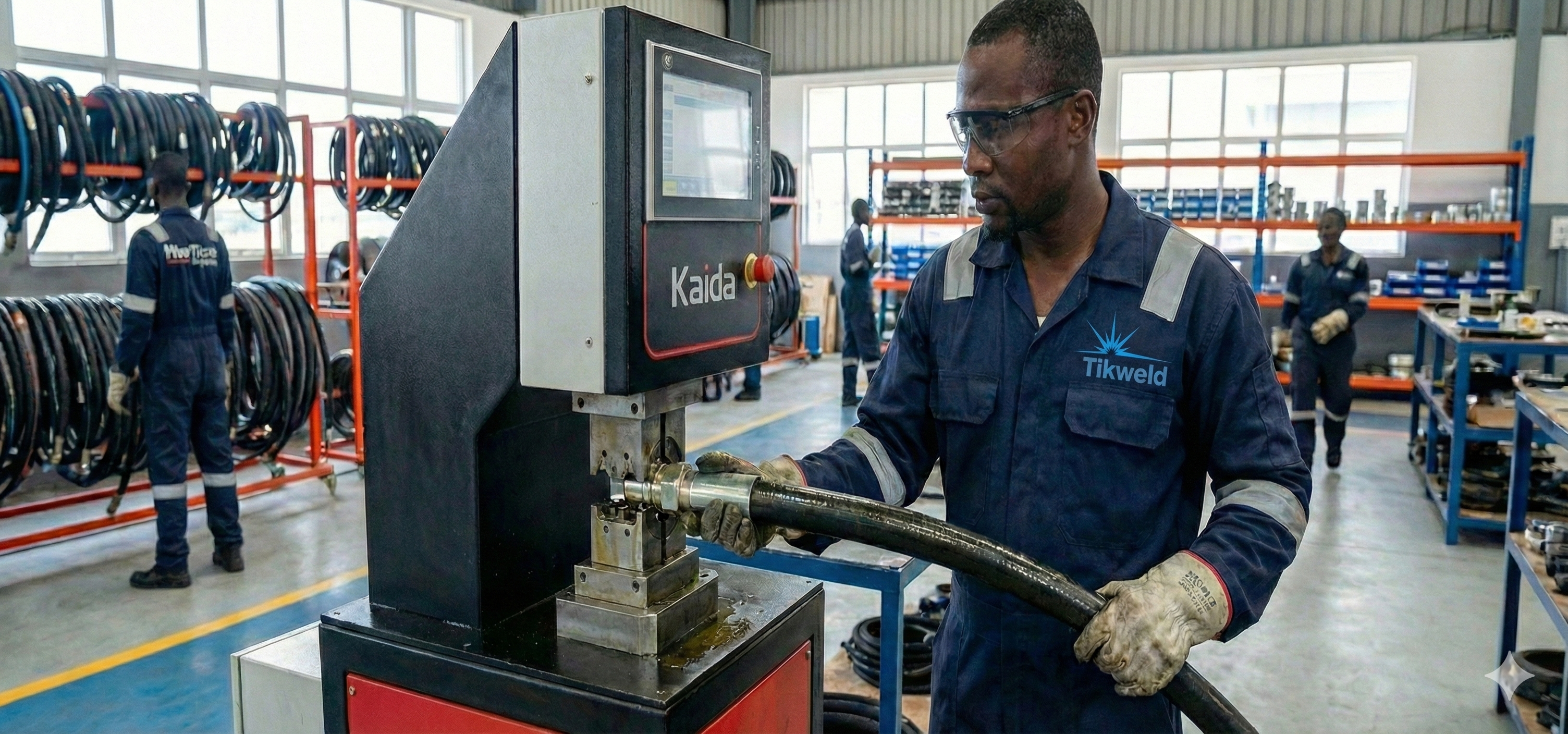
Hydraulic hose crimping is a precision service that permanently attaches fittings to hydraulic hoses using calibrated crimping machines and matched dies.
What Is Hose Crimping?
Hose crimping involves compressing a metal fitting around the hose using a hydraulic crimping machine to form a secure, pressure-rated connection.
This process ensures:
-
Proper sealing
-
Mechanical strength
-
Long service life
Our Hose Crimping Capabilities
We offer professional hose crimping services for a wide range of industrial applications.
We crimp:
-
Hose sizes from 1/4″ to 1″
-
Medium- and high-pressure hydraulic hoses
-
Oil, fuel, air, and industrial fluid hoses
-
Custom-length hoses based on equipment requirements
Each hose assembly is crimped using correct dies and verified crimp specifications to ensure safety and performance.
Hose Crimping vs Hose Replacement: Which Is Better?
In many cases, hose crimping and repair is faster and more cost-effective than replacing an entire hose assembly.
Crimping Is Recommended When:
-
The hose body is still in good condition
-
Only the fitting is damaged
-
Downtime needs to be minimized
Replacement Is Recommended When:
-
The hose cover is cracked or worn
-
Reinforcement is exposed
-
The hose has exceeded its service life
Our technicians assess each hose and recommend the safest and most economical option.
Common Causes of Hydraulic Hose Failure in Nigeria
Understanding why hoses fail helps prevent repeat issues and unnecessary downtime.
Top Causes Include:
-
Poor-quality hoses
-
Incorrect hose size selection
-
Mixing hose brands and fittings
-
Improper crimping
-
Excessive pressure or heat
-
Lack of routine inspection
Many failures can be prevented by using the right hose, correct fittings, and professional crimping services.
Industries We Serve
Our hydraulic hose sales and crimping services support industries across Nigeria, including:
-
Construction and heavy equipment
-
Oil & gas operations
-
Manufacturing plants
-
Agricultural machinery
-
Marine and offshore services
-
Fleet and logistics maintenance
-
Fabrication workshops
Why Choose Us for Hydraulic Hose Sales & Crimping Services
Choosing the right supplier and service provider is critical for hydraulic system safety and performance. We combine quality products, technical expertise, and reliable service to support industrial operations across Nigeria.
What Sets Us Apart
-
Precision crimping equipment calibrated for accuracy
-
Correct hose–fitting compatibility based on manufacturer standards
-
Experienced technicians with industrial application knowledge
-
Fast turnaround time to minimize equipment downtime
-
Quality control checks on every hose assembly
Our goal is to deliver leak-free, pressure-safe hose assemblies that perform reliably in demanding environments.
Service Coverage Across Nigeria
We provide hydraulic hose sales and crimping services across major industrial and commercial locations, including:
-
Lagos
-
Port Harcourt
-
Abuja
-
Calabar
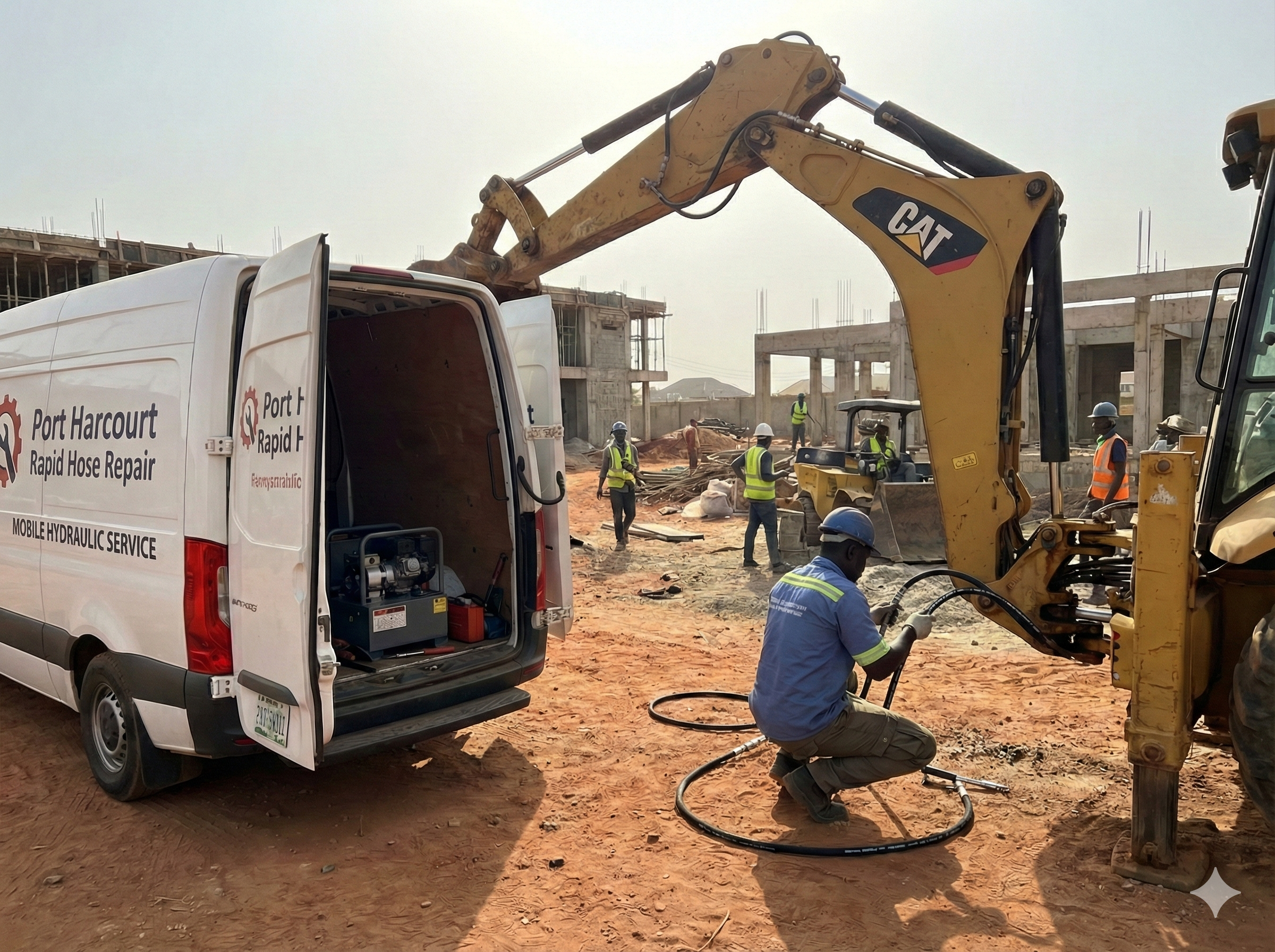
Both workshop-based and mobile service support are available depending on job scope and urgency.
How to Order Hydraulic Hoses or Book Crimping Services
Getting the right hydraulic hose or professional crimping service is simple:
-
Contact us via call or WhatsApp
-
Provide hose details (size, pressure, application, fitting type)
-
Get expert advice on hose selection or repair
-
Crimping, testing, and delivery
For urgent breakdowns, same-day service may be available.
Frequently Asked Questions (FAQ)
How long does hose crimping take?
Most standard hose crimping jobs are completed within a few hours, depending on size and availability.
Can you crimp customer-supplied hoses?
Yes, provided the hose and fittings meet safety and compatibility standards.
Do you handle high-pressure hydraulic hoses?
Yes. We support medium- and high-pressure hydraulic hoses used in industrial and oil & gas applications.
Do you offer emergency hose crimping services?
Emergency support is available based on location and workload.
Related article:
Price of Crimping Machines in Nigeria 2026 (Updated Guide)
Best Hydraulic Hose Sizes and Crimping Dies for Industrial Use
Conclusion
Hydraulic hose failure can cause serious downtime, safety risks, and financial loss. Choosing the right hose and ensuring professional crimping is essential for reliable operations.
For reliable hydraulic hose sales and expert crimping services in Nigeria:
Call or WhatsApp us today
Get precision crimping, quality hoses, and expert support
Reduce downtime and protect your equipment