
Best Hydraulic Hose Sizes and Crimping Dies for Industrial Use

Introduction
Hydraulic systems operate under extreme pressure, and the reliability of these systems depends heavily on one critical factor: proper hose sizing and correct crimping die selection. Even the highest-quality hydraulic hose will fail prematurely if it is paired with the wrong crimping die or incorrectly assembled.
In industrial environments—such as construction sites, fabrication workshops, oil & gas facilities, agricultural operations, and manufacturing plants—hydraulic hose failures can lead to costly downtime, safety risks, and equipment damage. This makes it essential for engineers, technicians, and procurement teams to understand which hydraulic hose sizes are best suited for specific applications and how to match them with the correct crimping dies.
This guide explains the most commonly used hydraulic hose sizes, their industrial applications, and how to select the right crimping dies to ensure leak-free connections, optimal pressure performance, and long service life.
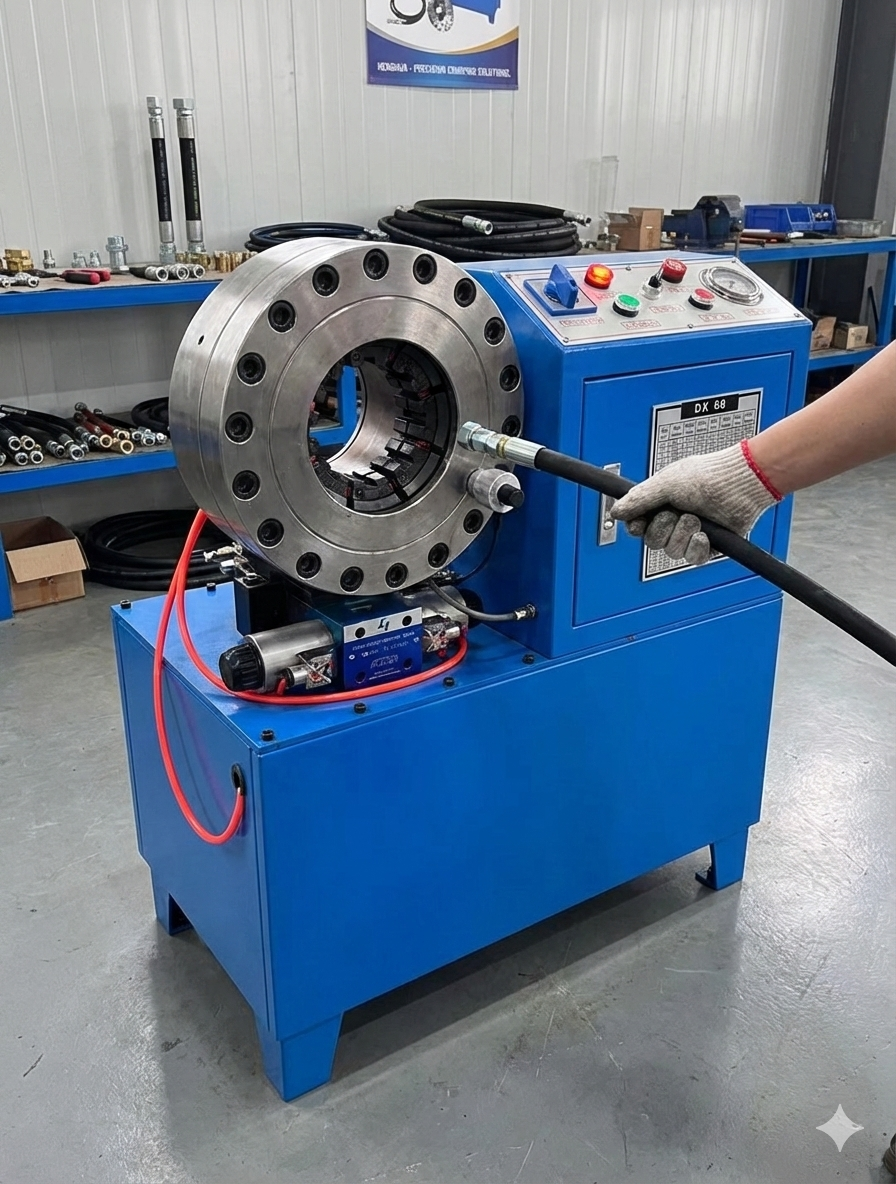
The Industrial Workhorse: The Kaida DX68 is the ideal solution for workshops targeting the core industrial hose sizes discussed in this guide. With a crimping range of 6mm to 51mm (1/4" ~ 2"), this machine easily handles the high-volume demand for standard 2-wire (2SN) hydraulic assemblies.
The robust 220V/415V motor and 10-set die kit allow you to instantly switch between precision instrument lines (-04) and heavy-duty return lines (-32), making it the most versatile choice for starting a hydraulic repair business.

LOOKING FOR HOSE CRIMPING SERVICE IN NIGERIA? CLICK HERE
How to Match Hydraulic Hose Sizes with the Correct Crimping Dies
Selecting the correct crimping die is just as important as choosing the right hose size. Using the wrong die can lead to under-crimping or over-crimping, both of which can cause leaks, hose failure, or catastrophic system breakdowns.
Key Factors to Consider When Matching Hose Sizes and Dies
-
Hose inner diameter (ID) – determines flow rate and pressure handling
-
Hose outer diameter (OD) – critical for die selection
-
Fitting type and brand – different fittings require different crimp profiles
-
Crimp specification (crimp OD) – manufacturer-defined final diameter after crimping
Always refer to the hose and fitting manufacturer’s crimp chart to confirm the correct die size and crimp dimension.
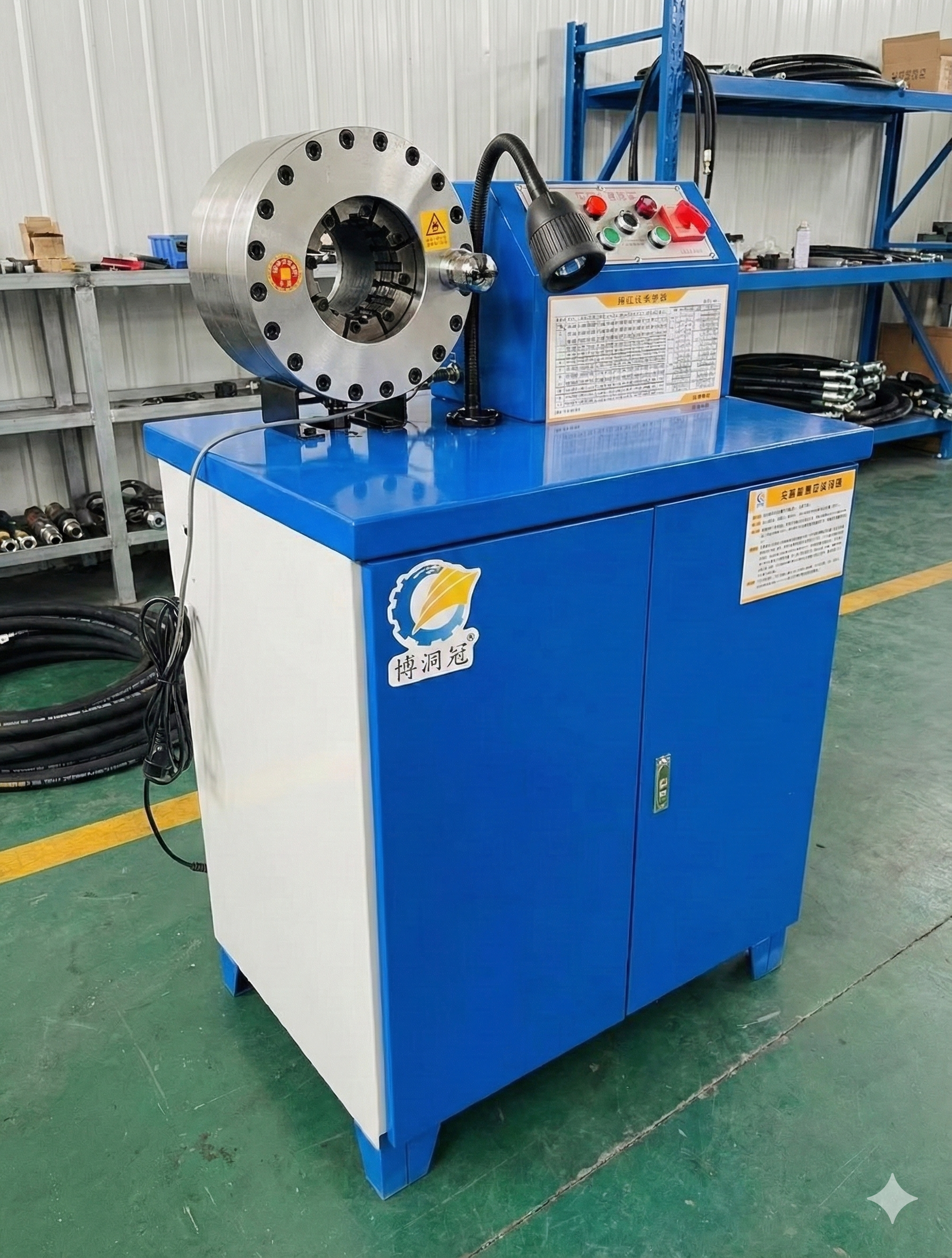
The Heavy-Duty Specialist: The Kaida HP51 For industrial applications requiring extreme durability, the HengHua HP51 is the superior choice. Unlike standard crimpers, this unit features an integrated Skiving tool essential for preparing high-pressure 4-wire (4SP/4SH) hoses.
With a massive 500T of buckling pressure—significantly higher than standard models—the HP51 ensures that even the toughest 2-inch spiral hoses are crimped to factory specifications. It comes standard with a comprehensive 10-set die kit, covering every major industrial size from 6mm to 51mm.
Common Hydraulic Hose Sizes and Recommended Applications
1/4″ Hydraulic Hose
-
Used in control lines, instrumentation systems, and light-duty hydraulics
-
Common in automation equipment and compact machinery
-
Requires precision crimping due to smaller tolerance margins
3/8″ Hydraulic Hose
-
One of the most widely used sizes
-
Ideal for medium-pressure systems, loaders, and agricultural machinery
-
Compatible with a wide range of standard crimping dies
1/2″ Hydraulic Hose
-
Used for higher flow rates in industrial machinery
-
Common in construction equipment, forklifts, and presses
-
Requires robust crimping dies to maintain pressure integrity
3/4″ to 1″ Hydraulic Hose
-
Heavy-duty applications with high flow and pressure
-
Used in mining, oil & gas, marine, and large industrial plants
-
Crimping accuracy is critical due to higher operating risks
Types of Crimping Dies Used in Industrial Applications
Standard Dies
-
Designed for common hose and fitting combinations
-
Used in general industrial workshops
-
Suitable for medium-pressure hydraulic systems
High-Pressure Dies
-
Used for reinforced hoses and extreme-pressure applications
-
Required for oil & gas, mining, and offshore equipment
-
Built to handle tight crimp tolerances
Segmented vs. Solid Dies
-
Segmented dies allow flexibility and easier replacement
-
Solid dies offer higher precision for specific hose brands
Crimping Tolerances and Quality Control
Crimping tolerances are measured in millimeters, and even small deviations can lead to hose failure.
Best Practices for Quality Crimping
-
Measure crimp OD using calibrated calipers
-
Perform test crimps before full production
-
Pressure-test assembled hoses before deployment
-
Maintain clean dies to avoid uneven compression
Common Crimping Mistakes to Avoid
-
Using the wrong die size for the hose OD
-
Mixing hose brands and fittings without compatibility checks
-
Skipping crimp measurements
-
Over-crimping to “feel secure” (this weakens the hose)
Choosing the Right Hydraulic Hose and Die Set for Your Workshop
For industrial workshops handling multiple hose sizes:
-
Invest in a wide-range hydraulic crimping machine
-
Keep a complete die set covering 1/4″–1″ hoses
-
Stock replacement dies for high-usage sizes (3/8″ and 1/2″)
-
Maintain updated crimp charts for all hose brands used
Conclusion
Choosing the correct hydraulic hose size and matching it with the right crimping die is not optional—it is essential for system safety, performance, and longevity. In industrial applications where equipment operates under high pressure and continuous load, even minor crimping errors can result in leaks, premature hose failure, or serious operational downtime.
By understanding hose size requirements, following manufacturer crimp specifications, and using properly calibrated crimping dies, workshops and maintenance teams can produce reliable, leak-free hydraulic assemblies that meet industrial standards.
Newest Guide & Blog Updates
Kaierda Inverter Welding Machines in Nigeria: Models, Specs and Price Guide
Introduction In Nigeria’s fast-growing industrial and construction sectors, welding remains one of t...
Best TIG Welding Machine for Stainless Steel Fabrication in Nigeria (2026 Guide)
Introduction Stainless steel fabrication is a critical part of many industries in Nigeria, including...

Stop Damaging Your Battery: Use Electrolyte and Distilled Water Correctly
Introduction Most battery failures don’t happen because the battery is bad, they happen because of w...
Crimping Machine Guide: Types, Uses and Buying Tips (2026)
Introduction In modern electrical and industrial systems, the quality of connections determines the...

Distilled Water for Batteries: Why It Matters for Industrial and Automotive Batteries
Introduction Batteries are essential components in modern industrial operations, vehicles, backup po...

Tubular Battery Explained: Types, Prices, and Best Options in Nigeria
Introduction Reliable electricity remains a major challenge across Nigeria. Frequent power outages a...